The Ultimate Guide to Choosing Safe Indoor Playground Equipment for Kids
For parents, FEC (Family Entertainment Center) operators, daycare owners, and mall managers, choosing safe indoor playground equipment for kids is non-negotiable. Indoor play spaces are where children explore, learn, and grow—but they can only do so safely if the equipment meets rigorous safety standards, is age-appropriate, and is built to withstand regular use. Every year, thousands of children suffer injuries from poorly designed or low-quality indoor play equipment, from minor scrapes to serious falls and pinches. This ultimate guide breaks down everything you need to know to select safe, durable, and child-friendly indoor playground equipment—covering safety standards, key features, age-specific considerations, and expert tips to protect the kids in your care.
Why Safety Is the Top Priority for Indoor Playground Equipment
Indoor playgrounds are designed to be safe havens for children, but poorly chosen equipment can turn them into hazard zones. Unlike residential play equipment, commercial indoor playground gear must accommodate high traffic, diverse age groups, and constant use—making safety features even more critical. Safe equipment doesn’t just prevent injuries; it also builds trust with parents, reduces liability risks for operators, and ensures children can play freely without fear. Whether you’re outfitting a small daycare play area or a large FEC, prioritizing safety ensures your space is a place where kids can thrive, and parents can feel confident leaving their little ones to play.
Key risks of unsafe indoor playground equipment include: falls and collisions (the most common injury), finger pinching, sprains, choking from small loose parts, and even trampling in overcrowded areas. By following this guide, you’ll learn how to mitigate these risks and choose equipment that puts safety first.
Non-Negotiable Safety Standards to Look For
The first step in choosing safe indoor playground equipment is verifying that it meets recognized international safety standards. These standards are designed to address every aspect of equipment safety, from materials to structural design, and compliance is non-negotiable for commercial use. Always ask manufacturers for official certification documents (in PDF form) to verify compliance—never take their word for it.
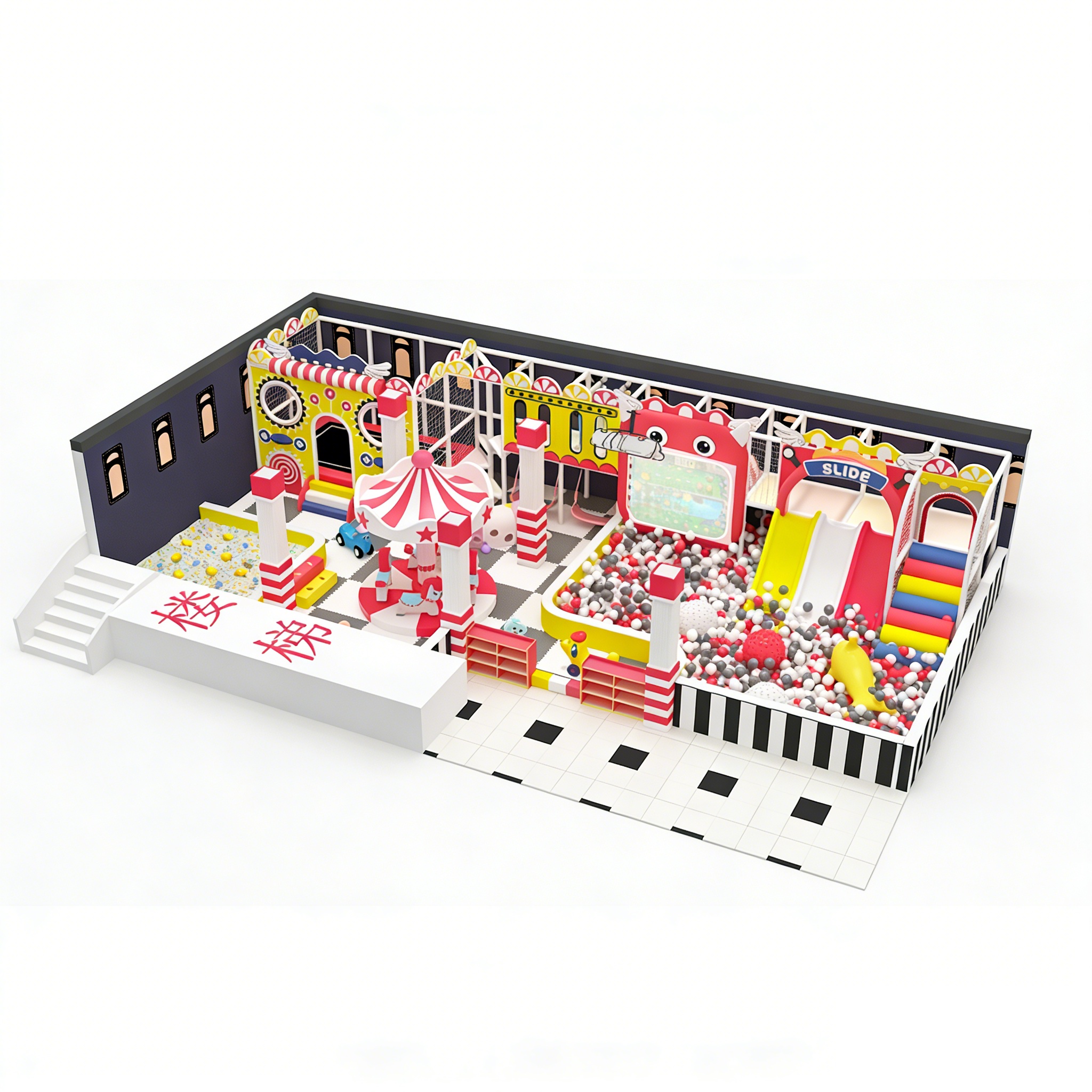
1. Global Safety Standards
- ASTM F1918 (USA): The primary safety standard for soft-contained indoor play equipment in North America. It covers everything from padding thickness to entrapment hazards and structural stability.
- EN 1176 (EU): A rigorous European standard that applies to all indoor playground equipment, including requirements for fire retardancy, impact absorption, and age-appropriate design. It also addresses maintenance and inspection protocols.
- ISO 9001: A quality management standard that ensures manufacturers follow consistent production processes to deliver safe, reliable equipment. Look for this certification to confirm the manufacturer prioritizes quality control.
- Additional Certifications: TUV Rheinland, SGS, and CE certifications are independent audits that verify equipment safety. These are especially important for materials and structural integrity.
2. Material Safety Standards
Children interact closely with playground equipment—touching, climbing, and sometimes even putting parts in their mouths—so materials must be non-toxic, durable, and safe. Look for equipment made with:
- Non-toxic, BPA-free, and phthalate-free materials (PVC, foam, and coatings) to avoid chemical exposure.
- Fire-retardant materials that meet ISO/EN 1176 standards—critical for indoor spaces where fire risks are a concern.
- Anti-bacterial and washable surfaces (like easy-clean PVC) to maintain hygiene, especially in high-traffic areas and ball pits.
- Durable, anti-tear fabrics and high-density foam (EPE or EVA) that won’t break down or shed small parts over time.
Key Safety Features to Prioritize
Beyond compliance with standards, safe indoor playground equipment includes specific design features that prevent common injuries. These features address everything from fall protection to entrapment risks, and they should be present in every piece of equipment you choose.
1. Fall Protection & Padding
Falls are the leading cause of indoor playground injuries, so effective fall protection is essential. Look for:
- Impact-absorbing flooring with a minimum thickness of 40mm, and 50mm or more around steel pipes and high-traffic areas. The flooring should be anti-slip and soft to the touch to cushion falls.
- Safety nets on all elevated structures (e.g., multi-level climbing frames) with small mesh sizes (8mm or less) to prevent finger entrapment and falls from height.
- Side barriers of at least 1 meter on elevated platforms to prevent children from falling off the edge.
- No exposed metal, screws, or hard edges—all sharp corners should be rounded and covered with thick padding.
2. Structural Stability
Unstable equipment can collapse or tip over, leading to serious injuries. Ensure equipment is:
- Anchored securely to the floor or wall to prevent tipping, even when multiple children are playing on it.
- Built with reinforced steel frames (minimum 3.0mm thickness) with anti-rust coatings (hot-dip galvanized or powder-coated) to ensure durability and stability.
- Free of loose parts, wobbly components, or weak joints. High-quality manufacturers use industrial-grade platforms and strong fasteners (like piano-wire springs) to maintain structural integrity.
3. Entrapment & Pinch Hazard Prevention
Children’s fingers, hands, or heads can get trapped in gaps or pinch points, leading to injuries. Safe equipment will:
- Have no gaps between 3.5cm and 10cm (the range where a child’s head or fingers can get stuck). All openings (tunnel entries, V-shapes) should be tested with head entrapment probes to ensure safety.
- Avoid pinch points in moving parts (e.g., swings, revolving doors, ball pit entrances) by using covered hinges or smooth, rounded edges.
- Eliminate loose or small parts (e.g., broken balls in ball pits) that can be swallowed or cause choking, especially for toddlers.
4. Age-Appropriate Design
Equipment that’s too advanced for a child’s age is a major safety hazard. Look for equipment designed for specific age groups, and separate play areas to prevent older children from accidentally injuring younger ones. Here’s a breakdown of age-specific requirements:
- 1–3 Years (Toddlers): Low platforms (no higher than 60cm), soft toys, padded tunnels, and small slides with gentle slopes. No upper decks or complex climbing structures. Equipment should be lightweight but stable, with no small parts.
- 4–8 Years: Small slides, padded obstacles, low climbing walls, and interactive play elements (e.g., play houses, ball pits). Equipment can be slightly taller (up to 1.2 meters) but still requires full padding and safety nets.
- 9–12 Years: Ninja courses, wall climbing, trampoline zones, and multi-level structures. These can be taller but must have reinforced safety features (e.g., thicker padding, stronger nets) to accommodate older, heavier children.
Age-Specific Equipment Recommendations
Choosing equipment that matches a child’s developmental stage not only improves safety but also enhances their play experience. Below are safe, age-appropriate equipment options for each age group, backed by safety standards and expert recommendations:
1. Toddlers (1–3 Years)
- Soft Play Blocks: Large, non-toxic foam blocks that are easy to grip and won’t cause injuries if thrown or dropped. Look for washable, anti-bacterial surfaces.
- Padded Tunnels: Short, wide tunnels with soft exteriors and non-slip interiors. Avoid tunnels with narrow openings or hard edges.
- Low Soft Slides: Slides with gentle slopes (no steeper than 30 degrees) and padded landings. Ensure the slide is wide enough for toddlers to sit comfortably without falling off the sides.
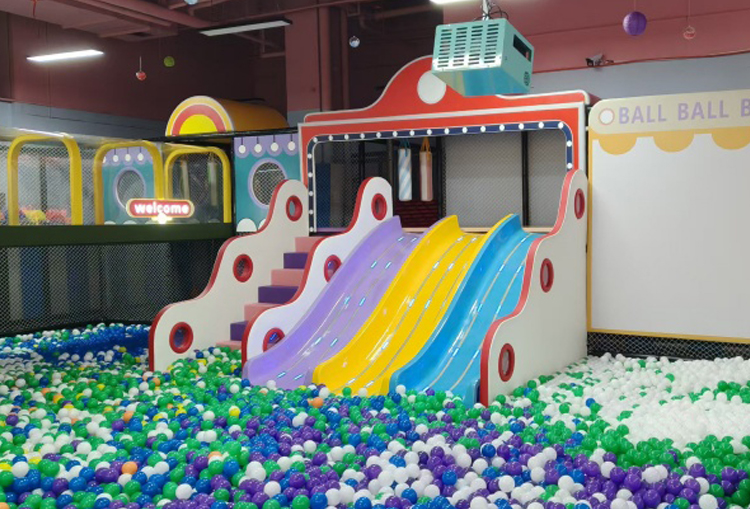
- Ball Pits: Small ball pits with large, soft balls (at least 7cm in diameter to prevent choking) and padded floors. Avoid overcrowding and ensure balls are cleaned regularly.
2. Preschoolers (4–8 Years)
- Modular Climbing Structures: Low climbing frames with handholds and footrests, surrounded by impact-absorbing padding. Look for structures with safety nets and rounded edges.
- Interactive Play Panels: Touchscreen or button-operated panels that encourage learning and play without physical risk. Ensure panels are durable and free of small, removable parts.
- Medium Slides: Slides with slightly steeper slopes (up to 45 degrees) and wider bases. Ensure the landing area is clear and padded.
- Role-Play Villages: Padded play houses, shops, or castles with open doorways (no narrow gaps) and soft exteriors. These encourage imaginative play while keeping kids safe.
3. Older Kids (9–12 Years)
- Ninja Courses: Obstacle courses with balance beams, monkey bars, and climbing ropes. Ensure all components are reinforced and surrounded by thick padding. Limit the number of children on the course at once to prevent collisions.
- Trampoline Zones: Enclosed trampolines with safety nets (at least 1.8 meters tall) and padded frames. Avoid overcrowding (one child per 20 sq ft) and ensure the trampoline surface is anti-slip.
- Wall Climbing: Indoor climbing walls with padded floors and grip holds appropriate for older children. Ensure the wall is anchored securely and has a safety mat that extends at least 1 meter around the base.
- Multi-Level Play Structures: Taller structures with stairs, bridges, and slides, protected by safety nets and barriers. Ensure all platforms have non-slip surfaces and clear exit routes.